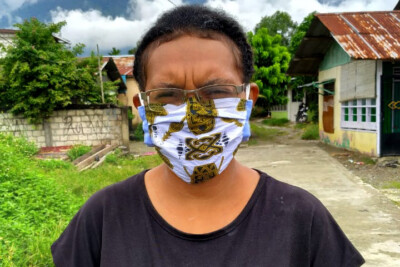
 The provincial government of Papua raised the alarms mid-March when it became clear that the corona virus had reached the island. People were requested to work from home, to keep a safe distance from each other and to wash their hands frequently. The first infections were officially diagnosed at the end of March. They were people who had recently entered Papua from other parts of Indonesia. Airports and ports were closed in early April. Here in Sentani you can do business on the street between 8am and 2am. Face masks and gloves are mandatory and grouping together is prohibited.
In practice, none of this works out. There are hardly any protective materials and young people are not interested in social distancing. The food stalls remain busy. It is a matter of survival. If you are not a civil servant, your regular income will almost disappear. After all, trade and business are possible at limited times of the day. The number of robberies and burglaries is increasing day by day. The government says it will provide basic food supplies, but that applies only to a limited number of neighborhoods around the capital Jayapura. Since April 20th, no vehicles are allowed on the road after 2 o’clock. Violations are severely punished. If you don’t cooperate, it means lashes from the police or jail in Sentani. The rules around Jayapura are more flexible. The government of the West Papua province did not take action until mid-April after several infections were identified. People are afraid and unsure about the future.